A new approach to studying battery thermal ageing
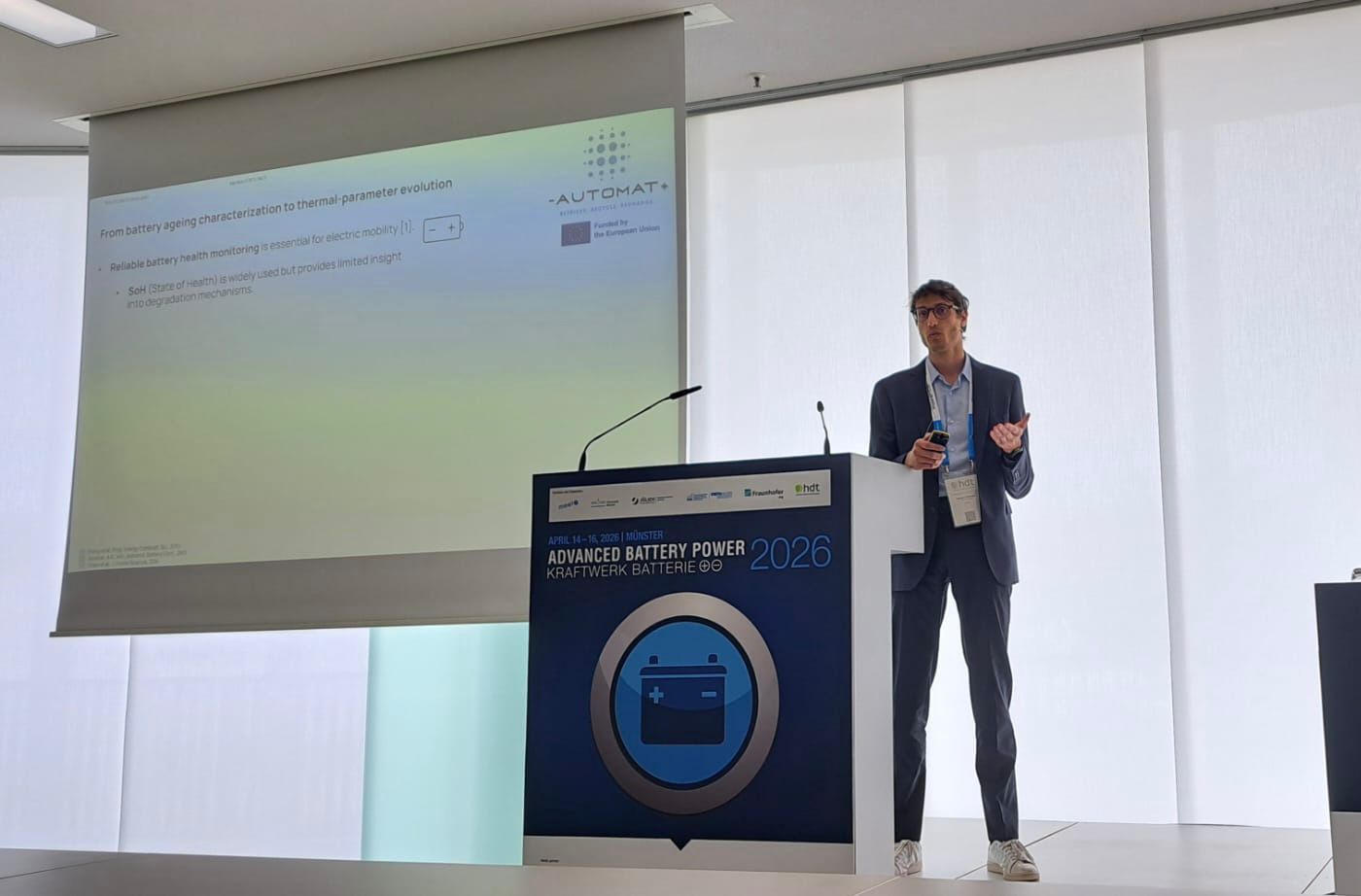
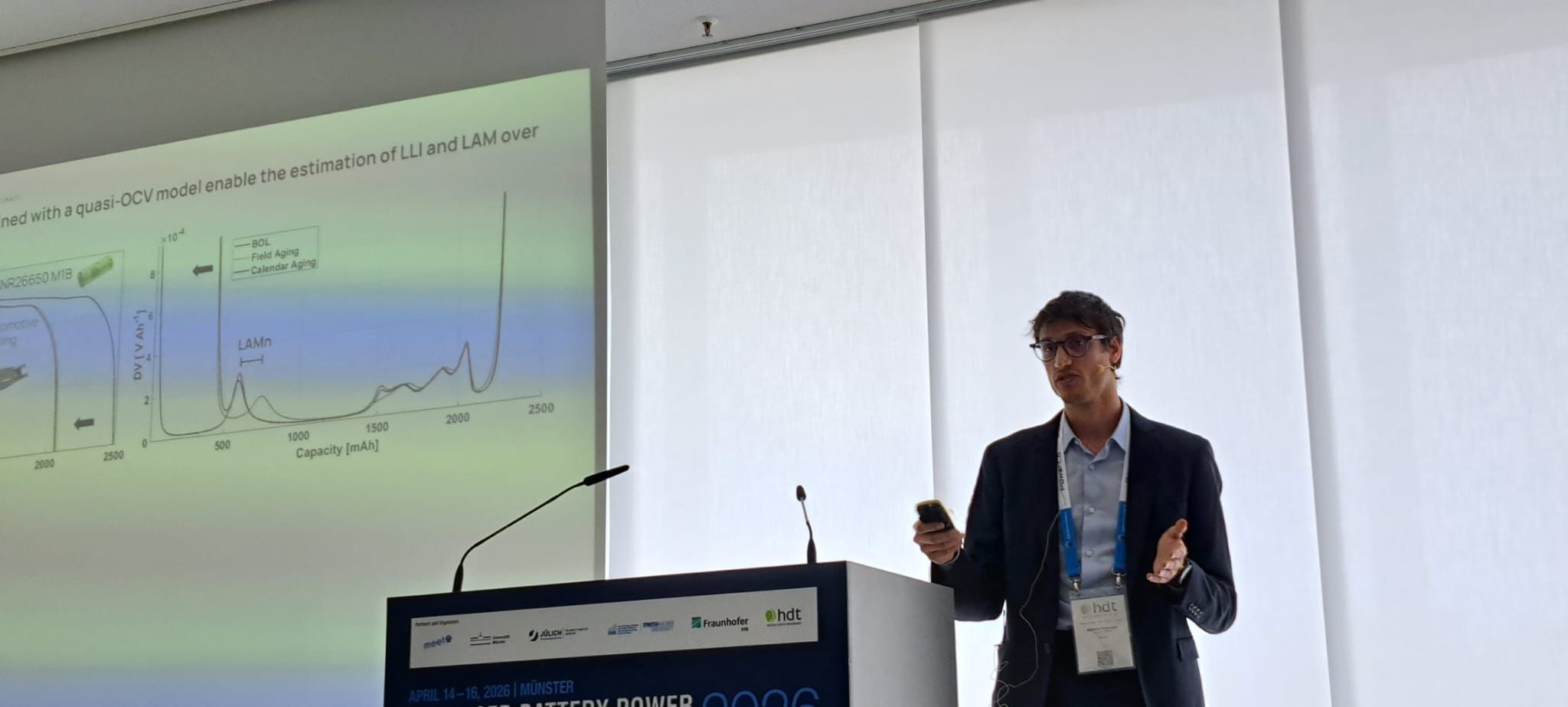
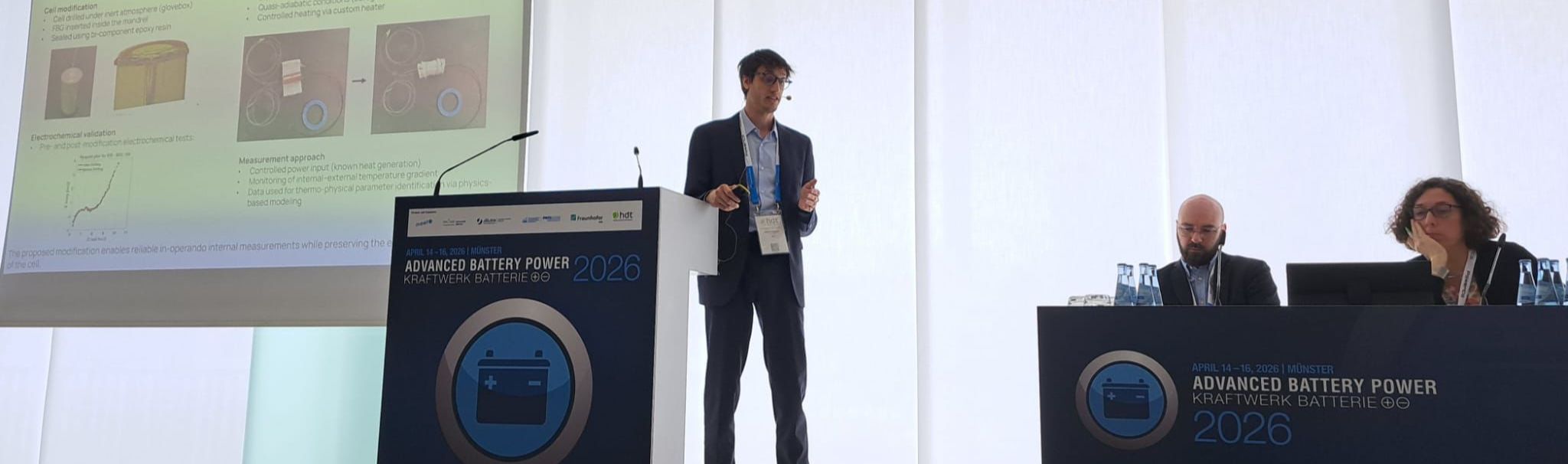
At the Advanced Battery Power conference, held in Münster from 14 to 16 April, Martino Fortunati, researcher at the Department of Energy, Politecnico di Milano, presented a study carried out within the AutoMat project, which develops new strategies for the management of post-use lithium-ion batteries.
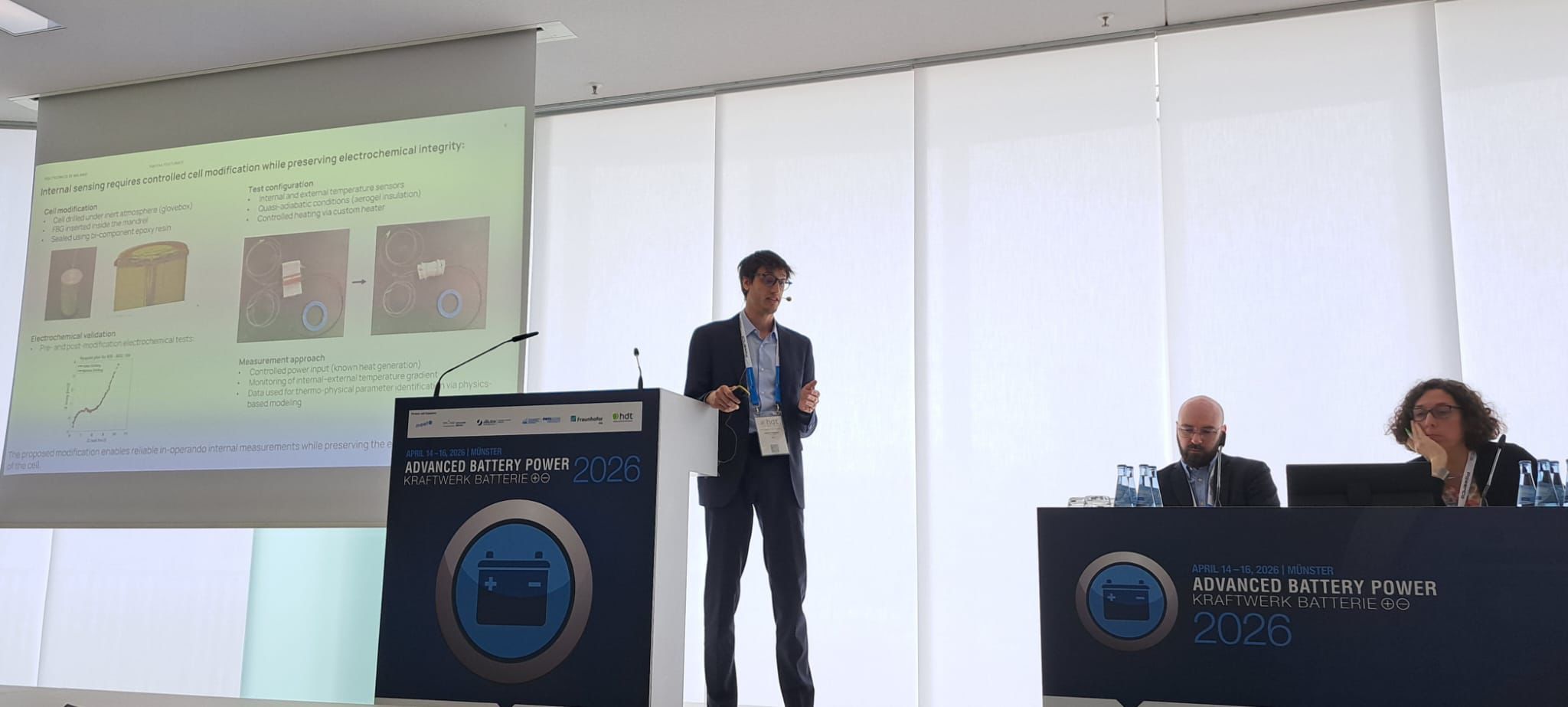
The work focuses on an aspect still seldom explored in the literature: how ageing modifies the thermo-physical properties of cells, in particular radial and axial thermal conductivity and specific heat capacity. To quantify these properties, the team developed a methodology combining controlled heating protocols in a quasi-adiabatic configuration with Fiber Bragg Grating (FBG) optical sensors integrated inside the cell, capable of measuring internal temperature without compromising cell operability.
Key findings: thermal anisotropy and ageing
The study, carried out on cylindrical 26650 LFP cells with varying states of health, showed that specific heat capacity follows a parabolic trend with state of charge, while axial and radial thermal conductivity — more stable across the charge range — differ significantly from one another, confirming strong thermal anisotropy within the cell.
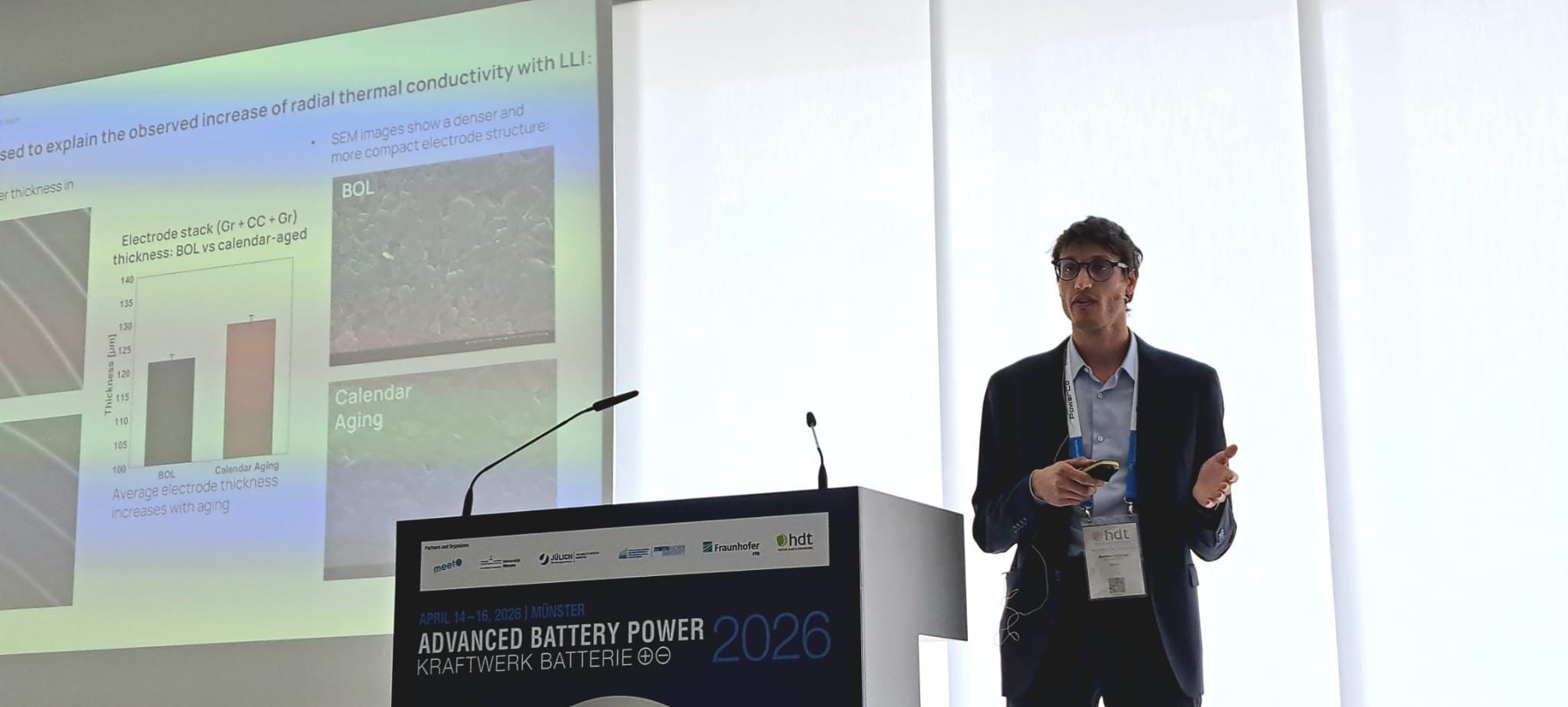
Radial conductivity in particular was found to increase progressively with degradation, rising by up to +15% in a cell at 83% state of health — an increase that proved directly proportional to the share of ageing linked to loss of lithium inventory.
From post-mortem analysis to model validation
To investigate the origin of this effect, the team carried out post-mortem analysis using Scanning Electron Microscopy (SEM), revealing the formation of an up to 10 μm thick, highly-fluorinated passivation layer at the negative electrode–separator interface. This layer appears to make the cell's internal structure denser and more compact, reducing thermal contact resistance.
The experimental findings were finally validated through a thermo-physical model, confirming consistency between the experimental observations and the theoretical interpretation.